Consent checklists: useful starting point or false security?
Consent checklists, sometimes called negotiation forms, kink inventories, or scene negotiation tools — are structured documents, usually digital, that ask both partners to indicate their preferences, limits, and interests across a range of activities before a scene. They typically work by presenting a list of acts or dynamics, with some kind of scale alongside each one: yes/no, willing/unwilling, or a graduated range from hard limit to enthusiastic yes. The idea is that both people fill one in, share their responses, and use the resulting picture as the basis for a conversation about what the scene might involve — or, in practice and increasingly, as a substitute for that conversation altogether.
Checklists for consent and negotiation have been circulating in kink and rope communities for years, and it's not hard to understand why — they feel practical, they feel thorough, and the intention behind them is usually genuinely good. But there's a gap between what these tools can do and what people expect them to do, and that gap is bigger than tends to get acknowledged, which is why it's worth being honest about both sides of it.

So are they ever useful?
They can be. If you're new and trying to figure out your own desires and limits, working through a list on your own can be a genuinely useful exercise, partly because it gives you language for things you hadn't thought to think about, and partly because it helps you identify hard limits before you find yourself in a situation where you feel pressure to decide quickly. As a prompt for self-reflection, and as a starting point for a conversation rather than a substitute for one, there's real value there.
The problem is when these lists become a replacement for more in-depth conversations.
It's also worth acknowledging that for some neurodivergent people, structured written tools can do work that purely verbal negotiation can't. A 2024 study published in Autism in Adulthood by Amy Pearson and Sophie Hodgetts found that the explicit negotiation and clear communication norms in kink spaces created a feeling of safety and predictability for autistic adults, reducing the ambiguity that can make mainstream social and sexual interactions stressful, and making it possible to be genuinely vulnerable in a way that unstructured interactions often don't allow. Ariel Pliskin's 2022 paper in Ought: The Journal of Autistic Culture makes a related argument: that the BDSM culture that emerged through the 1990s, with its emphasis on explicit rules and negotiated boundaries, was particularly well-suited to autistic people in ways the mainstream hasn't caught up with. So if a checklist helps someone identify and articulate things they'd struggle to raise verbally in the moment, that's a real and valid use.
But even here, the list is a starting point for a conversation, not the conversation itself, and the same risks around misuse, false completeness, and power dynamics still apply.
What a checklist can't do
A tick in a box is only as meaningful as the understanding behind it, and there's a lot a form just can't convey. Not because forms are inherently useless, but because consent is a dynamic, relational process that doesn't compress well into a static document.
The most obvious problem is that preferences aren't fixed. They shift with experience, with trust, with how you're feeling that day, with how you feel about the specific person you're with — and something that's a yes in the abstract might not be a yes tonight, with this person, after a hard week, for reasons you might not even be able to articulate in advance. This doesn't mean checklists are worthless as a snapshot; it means they need to be understood as a snapshot, and treated as an opening to a conversation rather than a record of one. Where it goes wrong is when the form gets treated as a fixed profile — or worse, a contract — shared as a shorthand for who someone is and what they want, without the acknowledgement that it was filled in at a particular moment, in a particular state of mind, possibly before the person had enough experience to know what they were actually agreeing to.
There's also a genuine ambiguity in what yes even means on a form, and it's one that checklists rarely surface explicitly. Does ticking yes to something mean it's on the table if it comes up, or that you're actively hoping for it, or that you've done it before and would again under the right circumstances? Those are meaningfully different things, and a checkbox flattens them. Some checklists try to address this with graduated scales — willing/enthusiastic/limit — but the gradations still can't capture context, and they can't capture the difference between what someone wants to want and what they actually want in the moment. There's also a subtler question: whether the point of a scene is to work through someone's stated interests, or to discover together what feels good — and a form, by its nature, orients you towards the former even when the latter might be more honest.
The completeness problem compounds all of this. Lists imply they're exhaustive, and that implication is false in a specific and important way: some of the most significant things in a negotiation don't appear on any list, because they emerge organically, mid-conversation, because something else was said first, or because a question you didn't know you needed to ask turned out to be the important one. A form can't replicate the way a real conversation moves, loops back, and surfaces things neither person anticipated going in. And the confidence that comes from a completed form can actually close down that exploratory space rather than open it.
None of this is new — kink questionnaires and elaborate tick-box spreadsheets have been doing the rounds on FetLife for over a decade, and despite recurring enthusiasm for them, they keep getting quietly shelved. That's not a coincidence. In practice, they tend to generate more complexity than they resolve: they don't replace the conversation, they just add a layer of admin on top of it, and they shift focus from the quality of communication between two people to the completeness of a document.
It's also worth asking honestly who tends to benefit from that shift — because in a best-case scenario it’s an excuse to have a conversation. In a worse case, the person with more experience, more social capital, or more investment in the scene getting a particular outcome ends up with a document they can point to later. Something that looks like due diligence but functions, when it needs to, as leverage. That's not a theoretical risk; it's a pattern that has played out repeatedly in kink communities, and it's one of the reasons these tools keep getting shelved even by people who thought they were a good idea at first.
Where it gets more serious
The accountability problem is where checklists stop being merely insufficient and start being a genuine risk. "But you ticked yes" is a real thing that happens, a way of using a document against someone, overriding how they feel right now with something they filled in weeks ago, and that's not consent, that's paperwork being used as leverage. And this unfortunately does happen.
There's a deeper point here too: just because someone says something is okay doesn't automatically mean it should happen. Playing with someone younger, less experienced, or in a vulnerable state comes with an extra level of care and responsibility that no form can discharge. Someone who doesn't yet know the norms, who hasn't been around long enough to have a sense of what's typical, what's reasonable, what's actually safe in practice, may feel they should agree to things they otherwise wouldn't, and a yes from someone who doesn't fully understand what they're agreeing to, or who feels the weight of a power differential they may not even be able to name yet, is not the same thing as informed, freely given consent. Just because someone says they want something doesn't mean a rigger or top should do it.
And if someone doesn't genuinely feel safe saying no, because of a power imbalance, because they want to be a good partner, because they don't want to make things awkward, no form is going to fix that. The form might actually make it harder, because it creates the impression that consent has already been sorted, when actually the conditions for genuine consent haven't been established at all.
What actually works
Consent is a skill. It takes time to develop, and there aren't really any shortcuts — which is maybe the least satisfying thing to say, but it's true.
Learning to check in, before, during, and after a scene, is more valuable than any list. Learning to read your partner. Learning the difference between what you genuinely want and what you're willing to go along with. Understanding that someone can change their mind at any point, including halfway through something they explicitly agreed to, and that this is completely normal and needs to be met with care rather than confusion.
There are resources out there that have genuinely stood the test of time and are worth investing in. One we trust a lot is Consent Academy — our team has done training sessions with them, and their Consent Primer is on the shelf in the studio if you want a starting point that's practical rather than preachy, and covers the things that actually matter: power dynamics, intent versus impact, what to do when things go wrong. The Wheel of Consent by Betty Martin is another framework worth learning properly rather than just encountering as a reference.
If you're new to the kink scene, the biggest contribution you can make — to the community, to your partners, and to yourself — is to take the time to read and learn from what's already out there, because there's a lot of good work that's already been done, and a checklist isn't a substitute for any of it.
Note: the checklists we're discussing here are not the same thing as keeping a personal list of questions or prompts you've developed for yourself over time — the kind of thing many riggers and bottoms carry as a quiet reminder of what they want to cover with a new partner. Those are a different animal entirely, and a genuinely useful one.
For more of our tips on discovering yourself, your boundaries, how to use safewords and more, please visit our blog.


Consent is not binary
One of the most persistent misconceptions about consent is that it's essentially a binary: yes or no, green or red, on or off, and that the work of negotiation is just a matter of establishing which side of the line you're on. But consent is better understood as a spectrum of willingness, and the difference between an enthusiastic yes, a reluctant yes, a yes-because-it-seems-expected, and a yes-because-I-don't-know-how-to-say-no is enormous, even if they all look identical on a checklist. This is why the quality of communication matters so much more than the presence of an agreement, and why creating conditions where someone genuinely feels free to say no, change their mind, or express ambivalence is the actual work of consent — not just getting a yes before you start.
Our 2 cents
There is a saying that we love to use: people first, kink second. And I think this sums up why tick-box consent strategies don’t stick: they focus on the activity and the destination, rather than on the process of discovery and mutual exploration.
Usually it’s the newcomers who gravitate towards these and it makes sense. Frenzy is a real phenomenon, and it happens to bottoms and tops alike. The sense of novelty in a new dynamic, a new partner, or a new community can feel genuinely exhilarating, like walking into a sweet shop for the first time and wanting to try everything at once, and that excitement isn't something to be ashamed of, but it is something to be aware of because it's precisely in that state that mistakes are most likely to happen.
It’s not the advice newcomer want to hear, but it’s one we’ll keep repeating anyway: it's okay to move slowly, to be left wanting more. You can always go further next time and just because you or your partner says they want something to happen in play doesn't mean it has to happen right away, or all at once. And the best parts of kink, almost without exception, happen in conditions of trust and genuine safety. And trust builds over time.
When we're focused on the destination rather than the journey, we risk treating the people we play with as a means to an experience rather than as the experience itself, and the important conversations — the ones that actually establish trust and shared understanding — are the first thing to get skipped. Checklists are tempting partly for this reason: they feel like they get you there faster, like a way of compressing the slow work of getting to know someone into a form you can complete in ten minutes. But in practice they're the most useful as a starting point, a conversation opener, not a substitute for the conversation.
References and further reading
Pearson, A. & Hodgetts, S. (2024). "Comforting, Reassuring, and…Hot": A Qualitative Exploration of Engaging in BDSM and Kink from the Perspective of Autistic Adults. Autism in Adulthood, 6(1), 25–35.
Pliskin, A.E. (2022). Autism, Sexuality, and BDSM. Ought: The Journal of Autistic Culture, 4(1), 9.
The Consent Academy (2019). The Consent Primer: Foundations for Everyday Life. Pan Eros Foundation.
Martin, B. & Dalzen, R. (2021). The Art of Receiving and Giving: The Wheel of Consent. Luminare Press.
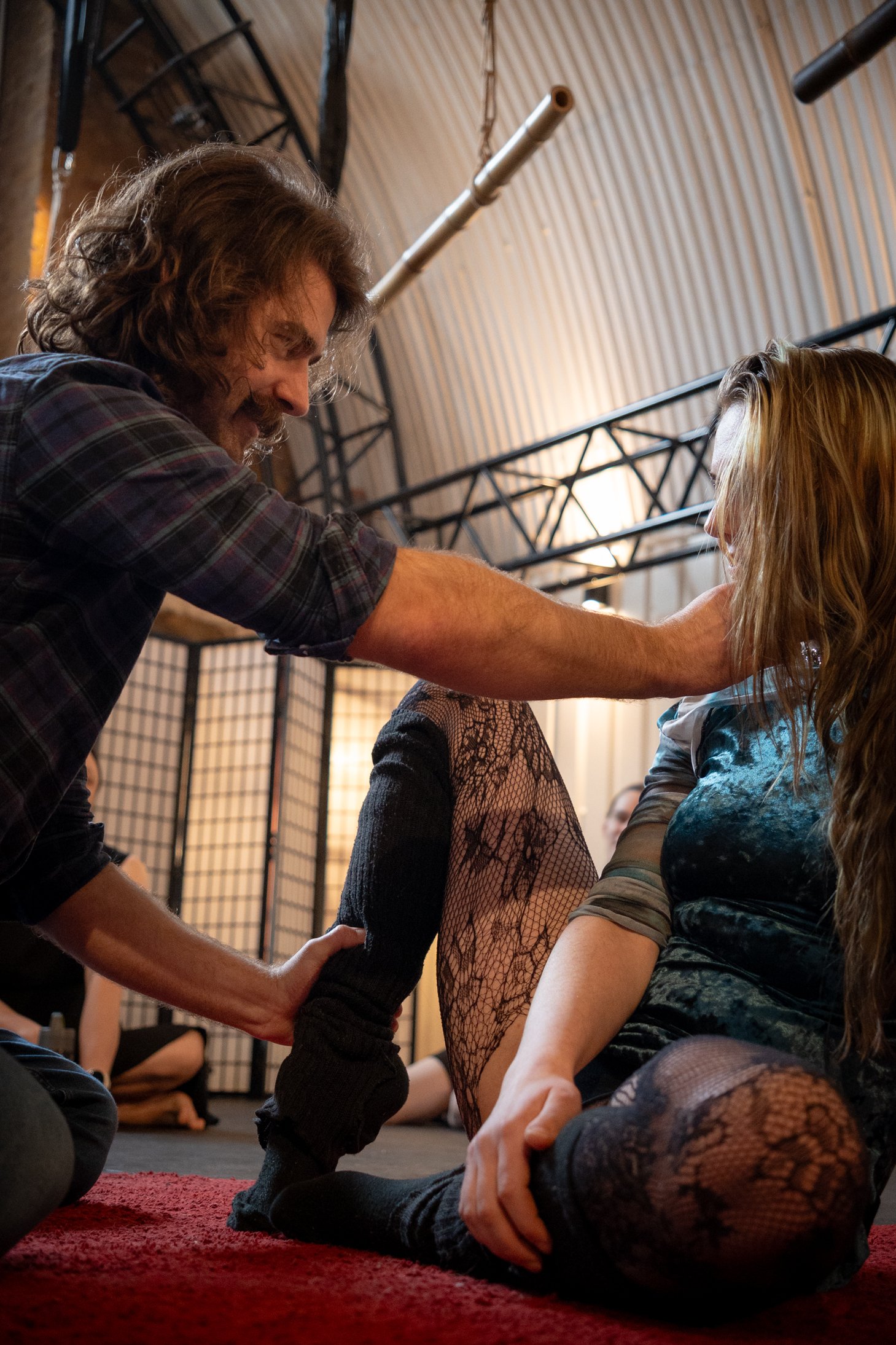
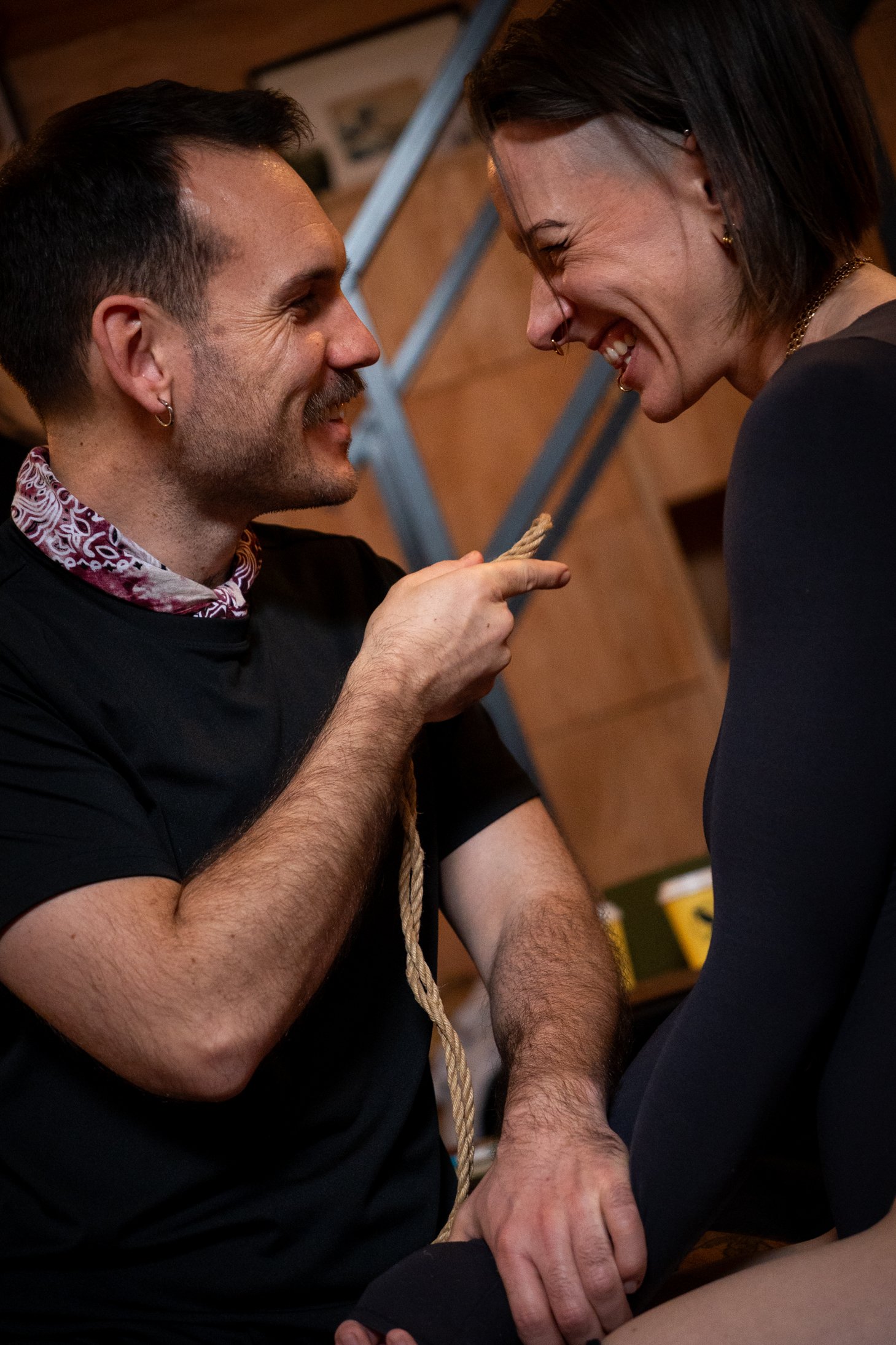
Photos credit: by @Tinylittlepixie from various events at Anatomie.
Researched and written by Anna Bones. This blog post summarises recent discussions on Discord about this very topic. It attempts to expand on some of the ideas discussed on there as well as introduce further nuance and detail. This post was not “written by AI”, it made use of Claude AI for help with structuring and polishing some elements of the text.
