Notes from Talking Rope: Disability and Kink
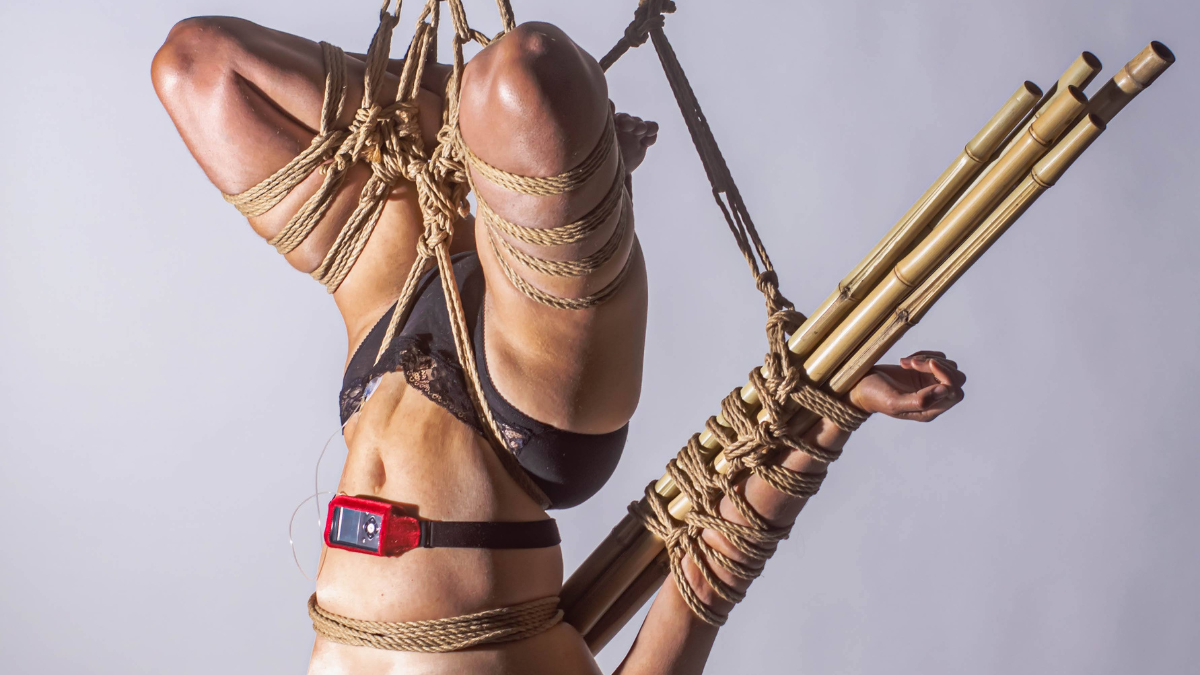
Anatomie runs regular “Talking Rope” sessions, in which the community is invited to discuss a variety of topics that relate to shibari. On Feb 25th, Rory Ropes facilitated a conversation around disability and rope. Please note, these are the views of people in attendance only.
The importance of knowing your own/ your bottom’s body
There is an expectation on you (as a disabled person) to know your own body and what you are capable of in rope/ in a scene. While it is important for rope partners to do their own research and not put everything on you, ultimately every disability, every person, and every person with a disability is unique. Each individual will have their own set of yeses and nos that are likely to change scene by scene. Rather than starting with a label, perhaps it’s better to initiate with the specific ways that your disability can affect you on any given day.
Saying that, if you are a rigger tying someone with a disability, it is still important to make sure you are doing so in a safe and advisable manner. This may include asking additional questions, doing extra checks, or even researching the disability as due diligence.
It is also worth noting that some nerve blocking medication means that standard safety nerve checks aren’t possible - something to be aware of in order to adjust your risk profile accordingly. For some, this may mean not bottoming for scenes anymore.

The challenge of accurate communication
There is a constant challenge in trying to find appropriate words/ ways to explain what is going on in your own body to other people. This is partly because things are subjective, but also partly because sometimes accurate words just don’t really exist. This kind of thing applies in medical scenarios when doctors are trying to get you to describe your level of pain, but also in rope scenarios and with potential partners. In some ways it is impossible to put words to how you are feeling, to be able to explain it to another person.
Good days and bad days
The disruption of routine or disappointment of cancelled plans can be challenging. When you are excited to do rope and you feel let down by your body, it can be hard not to spiral. Sometimes it can be helpful to try and flip the narrative, reframe it as: ‘What can I do?’ Even if you can’t manage a full scene, are there things you would be able to enjoy?
Knowing when to push at limits and when to not is something only you can figure out, and it may take time.
For some, rope can exacerbate symptoms. For others, rope — or at least specific aspects of it — can actually help their symptoms improve for a short while. Every body is different.
For many people with a disability, part of vetting partners now includes vetting to see how they will react if you have to cancel last minute due to illness. For many people, the guilt of feeling like you’re letting someone down is far worse than anything said or done by the other person.
Learning to renegotiate mid-scene
It is fairly commonly accepted that re-negotiating ‘up’ in a scene (making the scene more intense, doing additional things that weren’t discussed beforehand) is bad practise. However, something that some people with disabilities have to learn to do is to negotiate down. This might look like coming down early from a suspension, or doing less than was originally planned. This can be difficult for people who have an idea mapped out in their head, and it can feel disappointing to do less than they had imagined.
Going in with lower, less concrete expectations of a scene can be helpful for avoiding feeling disappointed by what you were able to achieve. It can also mean that you will surprise yourself if you are able to tie for longer or do more. You might find that the pressure of an expectation (for example, tying in order to achieve a specific shape) can sometimes negate the enjoyment of the process of tying. It’s a little bit cheesy, but remembering that it’s about the journey and not always about the destination can help.
[Note from Eleni: as a rope bottom with type 1 diabetes I will negotiate ‘up’, within pre-agreed parameters, mid-scene with trusted tops only, and with explicit consent from both of us that this is okay. Consent is hugely nuanced and I can prefer to under-estimate my capabilities rather than over-estimate, which opens up the option for additions, rather than cutting things short.]

Feeling like you are being ‘left behind’
Disability can absolutely be a limiting factor. It can feel hard seeing others on social media posting rope photos that you would love to be able to recreate, or seeing able-bodied people progress in their rope journey faster than you can.
We live in a world of comparison and it’s hard not to measure yourself against what you see online. It can be helpful to try and remind yourself that social media is a snapshot of someone’s life, and it often shows their best sides. As a viewer, you don’t know what the BTS was like for a photo, how long they were able to hold that pose, or what someone else’s personal circumstances are; remembering this when you feel ‘less than’ can be helpful.
Diversifying your feeds can help to normalise difference: finding other rope bottoms and kinksters who manage the same disability (if at all possible), or who have disabilities in general, can be really helpful.
Managing noise and/ or hearing loss
Challenges with hearing are quite common. Some people find it harder to hear generally, others can find it especially difficult to navigate around background noise, while others still find certain pitches hard to hear.
This can be especially challenging as a rigger where verbal communication can be extremely important, and often a bottom’s instinctive way of trying to communicate that they’ve reached a limit. In these situations, it can be helpful to have pre-negotiated non-verbal cues as well, for example a double hand squeeze to communicate that everything is ok. This sort of contact can also just be a nice check-in during a scene generally.
Desire for control
For some, having a disability means that they feel drawn to topping in rope more than bottoming. There can be a need to create control when your body feels like it has a mind of its own; rigging can provide this.
For others, being tied or self-tying is a way of relinquishing control in a way that feels safe and comfortable; it’s a way of experiencing pain that you choose to feel (rather than pain that you don’t).

How disability can change your relationship to rope (and pain)
A new diagnosis can be a lot to take on and it can often impact on your ability to enjoy the things you used to. Your relationship with pain may shift. For people without a disability pain can be something enjoyable to be explored, but desire for pain can shift and change unexpectedly with your health.. This, in turn, may affect the sort of rope you want to do, and also the type of rope that is possible. Your pain tolerance might also change.
Bruising / marks
Your relationship with bruising can change with disability. Being on certain medications (blood thinners, immunosuppressants) mean that skin is more likely to bruise, and that bruising is more dangerous.
In the absence of disability, marking from rope might have been a nice memory, whereas now, on medication, bruising is outside of someone’s risk profile. Some people have decided that bottoming for rope scenes whilst on these medications is not on the cards, whilst other people want to still do rope scenes but trying hard to avoid bruising. Advice for being on these meds and still wanting to do rope? Do rope with someone you trust, start slowly and build up, you will get to know your body and its limitations over time.
Talking to medical professionals
Finding healthcare workers who you feel comfortable disclosing your interests in kink or shibari to may or may not be a priority for you. If you are reliant on the NHS you might not have any choice in this either: your healthcare professionals will simply be whomever they are.
However, if you do have some agency then finding a medical team who understand rope and kink and neurodivergence, including mental health professionals, can be incredibly helpful. It can be challenging opening up to people who you don’t feel safe with.
With doctors you might not feel comfortable with, you might decide to ‘translate’ your real question for them. For example, reframing a rope related question as a yoga related question is an option. Other doctors might not initially understand but you feel comfortable giving it a go: reframing or explaining rope in terms of similarities between it and circus arts might provide them with a frame of reference. You might be lucky enough to have a doctor who actively wants to know more about rope, and might even want to see photos to understand it as best they can. All of these are possible, but it’s always up to you to decide what you feel safe to share.
People’s most common experience of GPs is that they tend to be less patient and understanding than other doctors or healthcare workers. Interestingly, often the best experience is with healthcare workers in GUM clinics who are generally less judgemental and dismissive.
In a wider context, there is also the ongoing challenge of doctors not believing that you know more about your own body than they do. This is particularly noticeable within certain ethnic/ racial groups, for people of certain genders and for fat people.
Disability and fatness
Medical doctors commonly seem to blame disability on fatness even if the symptoms existed beforehand. This is a huge challenge, and while not specifically related to rope this topic came up as part of the discussion. A great resource is @thefactdoctor.
Community as a resource
The openness in sex-, rope- and kink-positive spaces can help some people talk more openly to doctors and medical professionals about intimate details. Often doctors ask very intimate questions very matter-of-factly and it can be quite jarring if you aren’t used to it.
When it comes to going to rope jams, if you aren’t feeling up for it that day, knowing that there is a community of people (on Discord/ Instagram /in real life) who you can ask to take your place with your partner, can helps ease the guilt of not feeling well and needing to cancel plans.

Invisible vs visible disabilities
Some disabilities are more visible than others, so... who has the ‘right’ to host an event on disability or been seen as the face of disability? Should it be someone who is visibly disabled or can it be someone with an invisible disability?
For people with invisible disabilities, imposter syndrome can feel very real. It's likely you will feeling like you are not ‘disabled enough’ to attend an event set up for disabled people, or to even call yourself disabled.
Key takeaways
- Disability is very likely to change your relationship not only with your body but also to pain and possibly rope itself.
- Knowing your own body (and being able to communicate that with others)
- Knowing when to push yourself (safely) and when to take a break
- The expectation of the end state in rope (ie tying in order to achieve a specific shape) can sometimes negate the enjoyment of the process of tying
These are useful for able-bodied people to bear in mind with rope as well!