On the journey of learning a single column tie
The following text is written by guest writer Kina Neve (Anatomie team member since 2016).
I have been teaching how to tie single column ties for 10 years now. Since I started doing shibari, I picked up the basics, and I had small groups at jams where people would huddle around and I’d show them what little I knew at the time: the basic structure of how to start a tie. It wasn’t good, but I knew the basic pattern, I saw people struggling with that alone, so I could at least show them that before the actual teachers would then help to improve — they would learn, and I would too.
At the beginning single column ties were also something that made me worry. Most ties started with them, and they were the first point of safety for everything. I had to learn to make them strong enough that they would hold. I had to learn to make them balanced to be comfortable. I had to learn how to tie them at an angle to make them work in some suspensions. While getting them good enough to do more complex things didn’t take long, getting them to a point where I could just trust them was an entirely different matter.
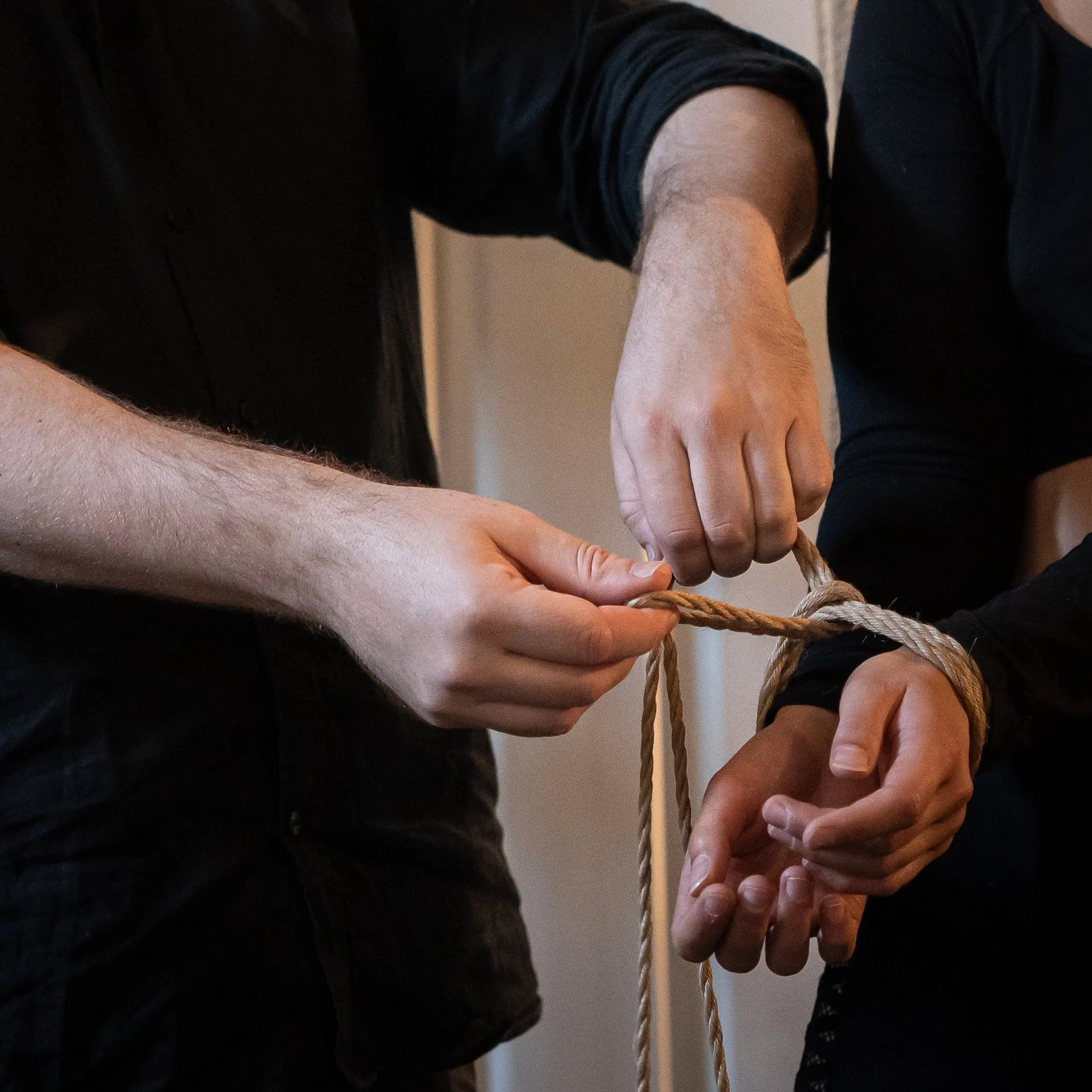
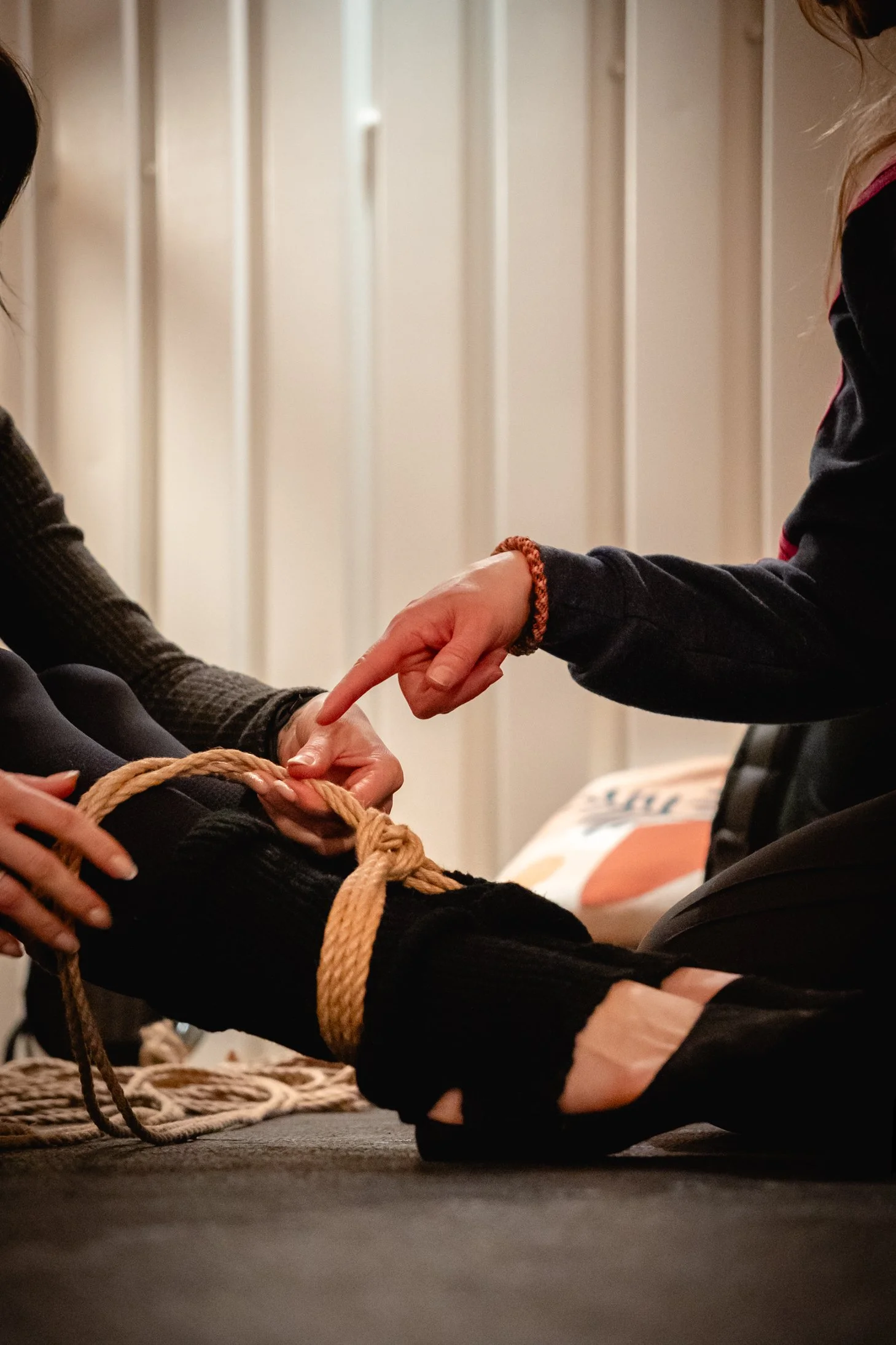
During Haag and Husalia class (2025). Photo by Pixie.
I decided to pick up one specific way of tying it among the many variations of both knot and movements, and reviewed with my teacher to make sure it was a good one. I then just kept doing it. When I was sitting at a rope jam talking to people I would at the same time just practice it over and over, to build muscle memory. Every time reviewing and adjusting placement, movement, tension. When starting to tie, I would always start in the same way. While I took notes when teachers showed a different way to tie a single column tie — either by teaching it, or by observing — I still kept practicing just one.
I then reached a point where I could tie that specific single column tie quickly, reliably, under many different conditions. Small columns (...adjust the rope length). Big column (...capture the bight so it doesn’t fall). Heavy column (...hold the weight first). Moving column (...follow with the body as I tie). Diagonally (...grip the rope first). Bratty columns (...hand under to hold from the first tie). Single ankle suspension column (...the placement matters). Two people together (...omg you two stop it)... Learning to tweak the same base technique instead of changing it to adapt has been incredibly useful to get more insights in the tying process itself and improve.
At this point I usually get asked: ok but which one did you pick then? I still remember the moment I picked. I happened to be at a performance night at Anatomie Studio. Gestalta was doing an elaborate suspension, and I saw her tying extremely quickly a single column tie on an ankle, upside down, to then do a suspension from it. I spotted it was a Somerville bowline… but the way she tied it? That made a big difference. I liked the concept of a Somerville bowline because at the time I was doing self-suspension and it would have helped to know that no matter how hard I pulled and in which direction it moved, it would hold. But I couldn’t make peace with the way it was usually taught: …hold the bight, do a loop with the other hand, hold, put the bight the—nope. Too fiddly. Too slow. Not for me. But what she just did? That was fast. How. I needed to know. Long story short, I found out, and I locked in that specific Somerville bowline since.
After answering the question, I would also add: do not copy me. I picked what I picked because of my own body type, brain preference, movement capacity, needs, style, and risk profile. Different people should pick the one that works for them.
I kept locked in to one type only for years. Not sure exactly how many, probably around 5 years or so of experience — tying about 2-4 times per week. By then it was so second nature that I knew I could trust it. I could be entirely absent-minded — which means: extremely below the threshold I would tie anyhow — and I was still able to tie a working one. Good.
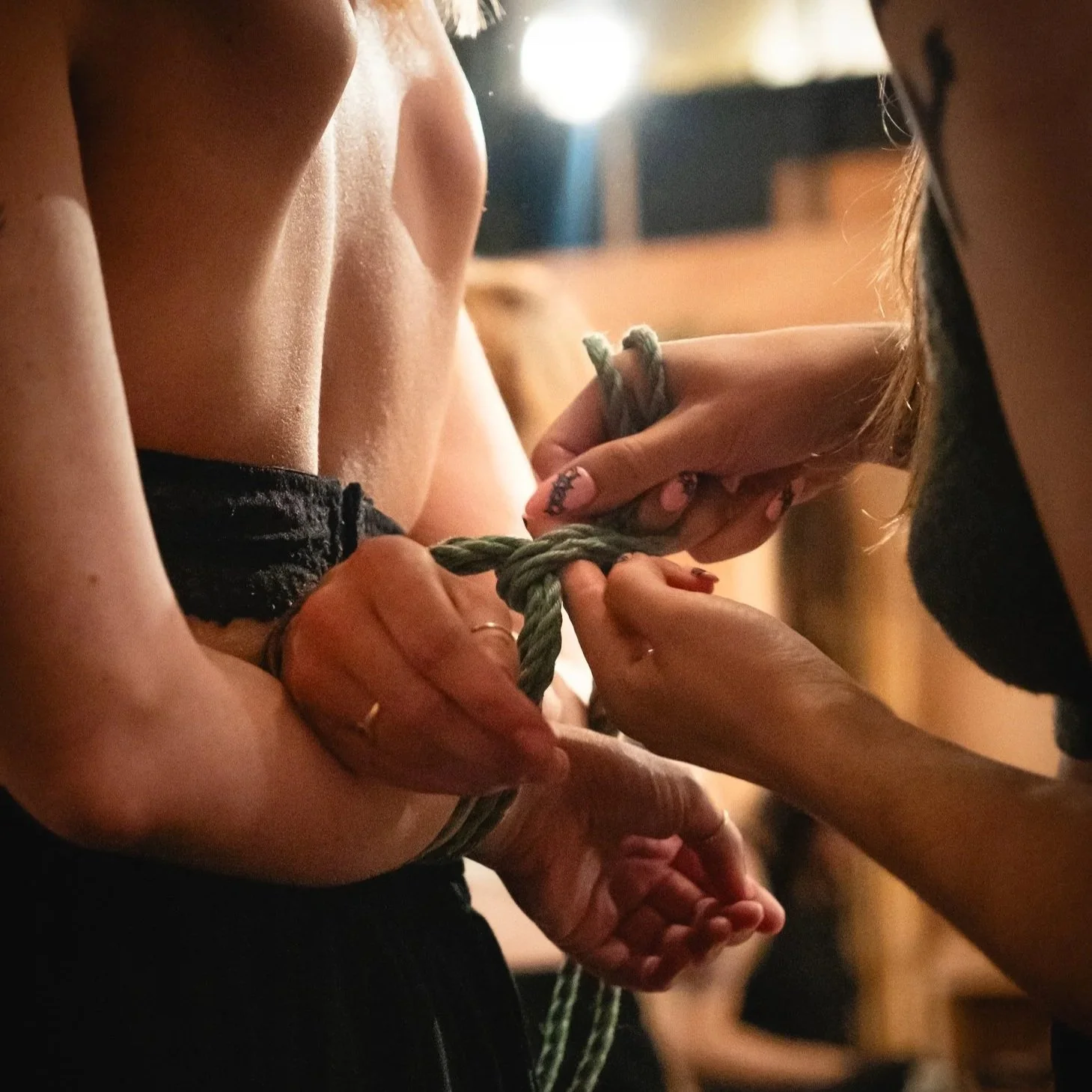
Participants during Fred and Anna’s Agura class in 2025. Photo by Pixie.
Once I reached that level of security, I started introducing variations. I had a baseline I could use to assess pros and cons of any other option, making it easier to make decisions. I can opt for a reef knot when I need to, or a granny knot, or one wrap, or three wraps, or any other variation, and pick depending on the situation.
Teaching has also been a very valuable element in my single column tie journey. I love teaching, especially beginner classes. Seeing people going from zero to something that they can already use and play with is so beautiful.
Beginners also tend to challenge the teacher's understanding of the material they are teaching in so many different ways that each question can lead to a much deeper learning. Most of the time I was asked questions that had answers, but then left me with “Yes but… why?”. After the class I would then either ask people, or practice on my own variations. For example years back a student was doing what looked like the right tie and movement, but ended up to be a noose. I knew what was happening, we talked, I showed how to do it right. And yet… After the class I went in a corner and practiced: I wanted to understand exactly what was leading to one or the other. As odd as it sounds, I practiced the wrong version to learn how it worked, so I could understand the right version better.
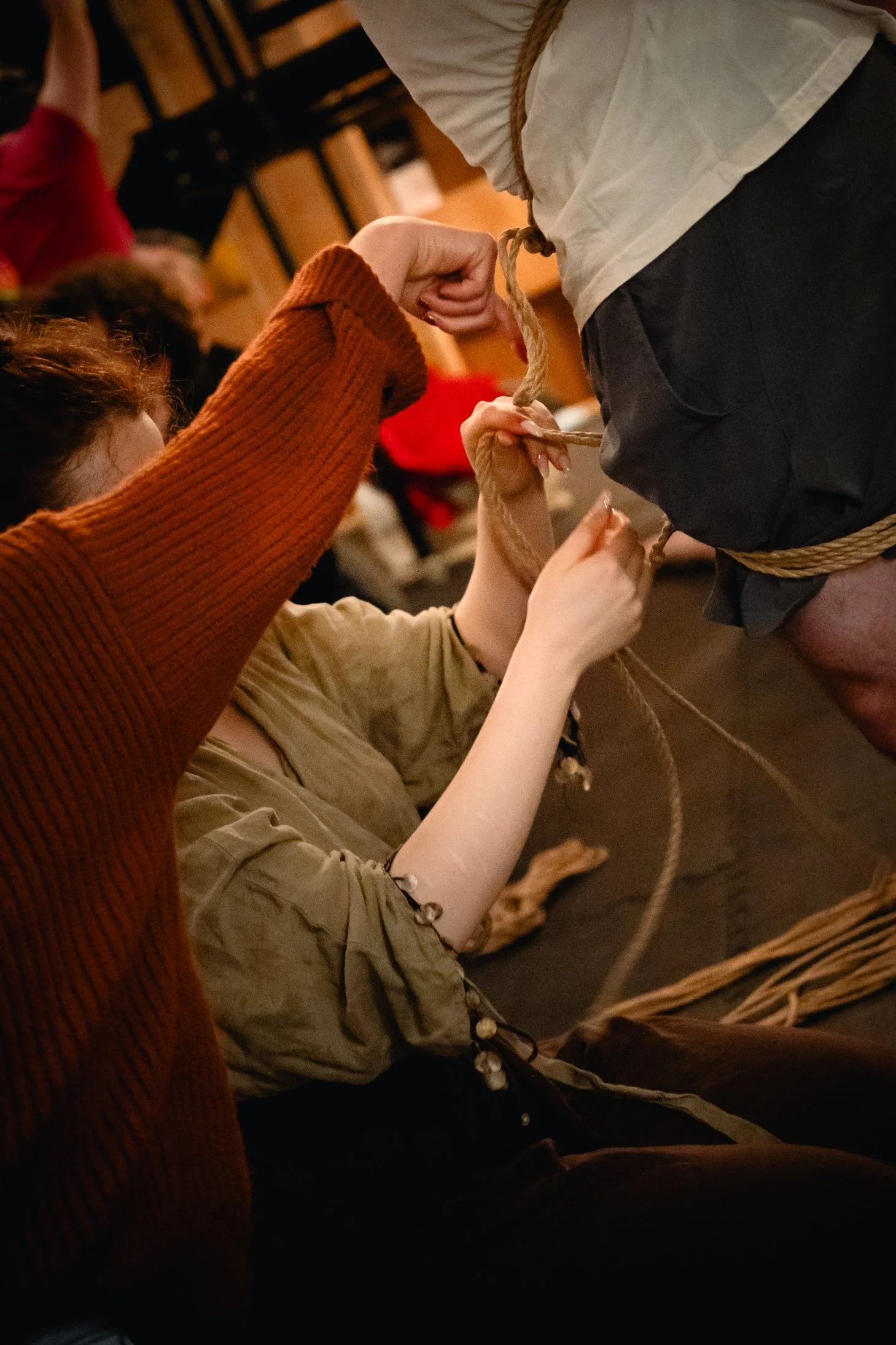
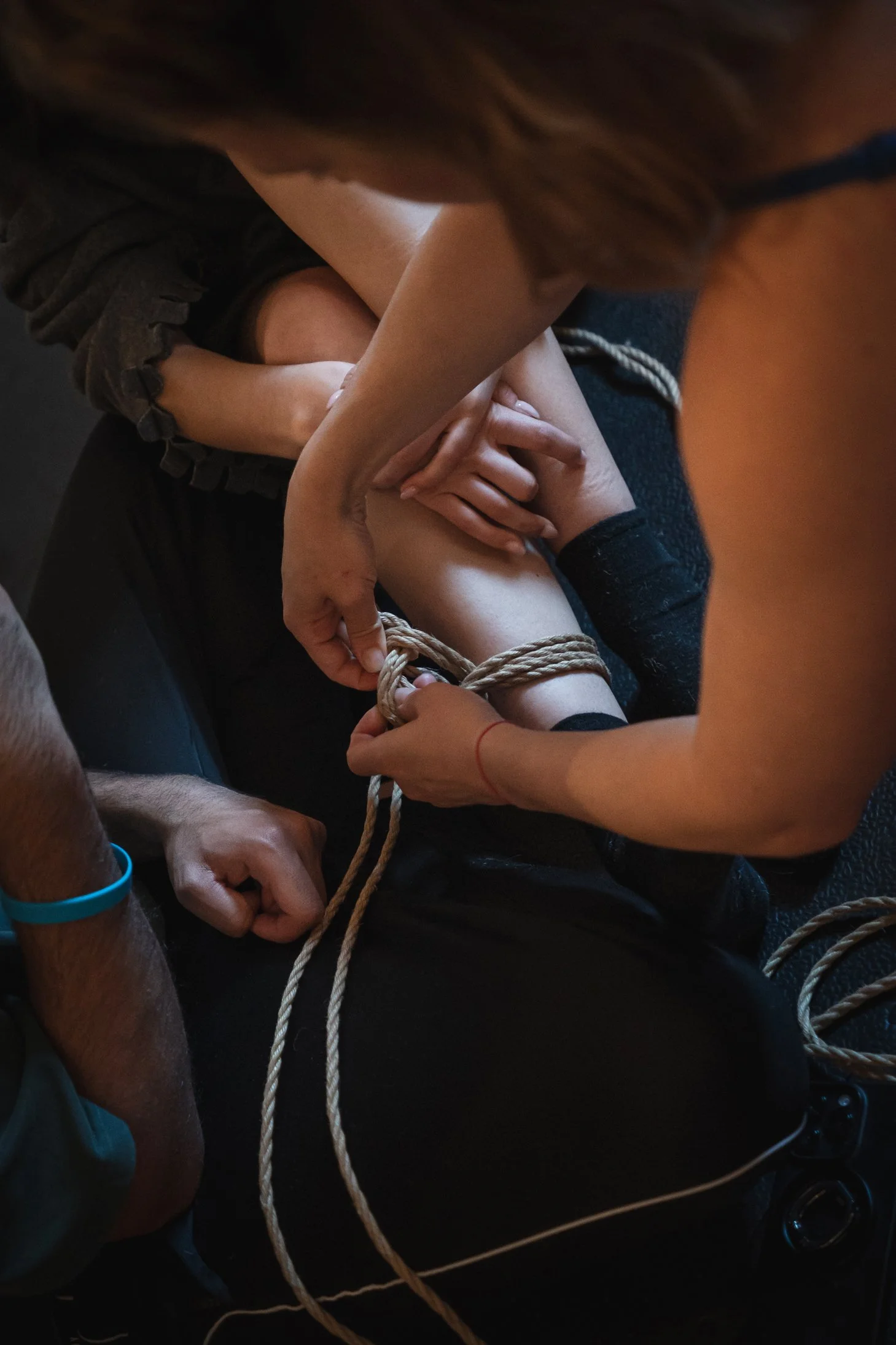
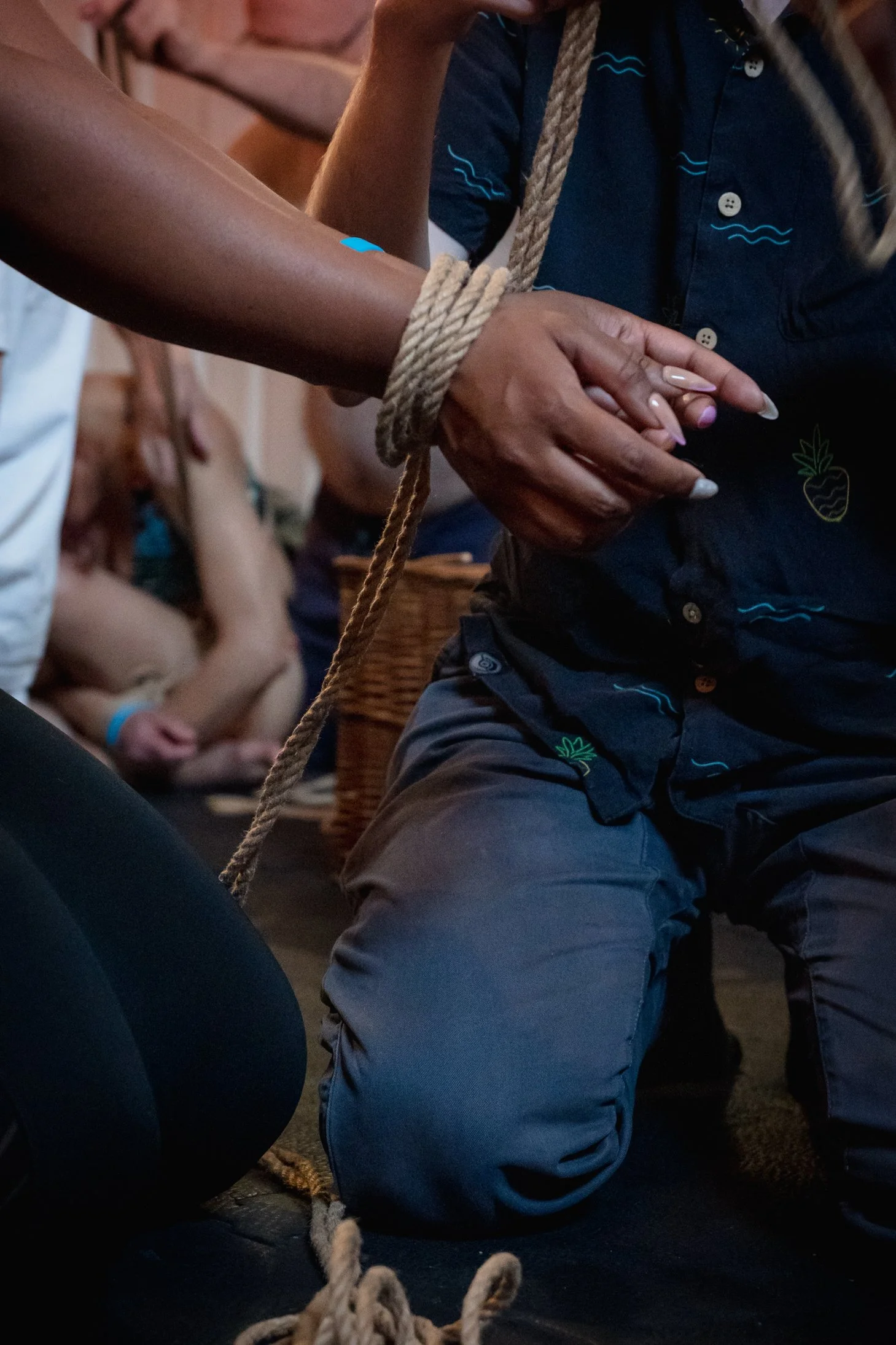
The complexity hidden in this apparently simple tie also led me to a better understanding on how different people are, and how they learn.
Rope is fascinating to teach because it’s a technical endeavour of knots and patterns, combined with the movement that leads to that outcome, combined with how someone’s body and mind work, combined with the other person, combined with the emotions, all coming together to create something. It also challenges the limits of language where “up” and “down”, “over” and “under”, mean different things for different brains. What’s the reference system? Is “up” relative to the model? To the rigger? To the ground? To the previous rope? Language doesn’t help in a three dimensional space where every person applies a different frame of reference.
I’ve a personal challenge with myself in trying to find the “perfect” way to teach a single column tie that is intuitive enough that the whole class gets it. At times I thought I had it… and then the next class it fails for a few people. While I’m now relatively sure it’s not an achievable outcome, I still keep going towards that goal as it helps me improve. This also led me to acquire many different ways to teach a single column tie. In classes I start by teaching one to everyone, then I go to the people that struggle, I ask them to show me how they are doing it, and then I pick the next one that from what I see should be easier for them to learn. I’m still in awe seeing someone going from struggling with one explanation, to getting it right first try with an entirely different explanation. Same tie. Same result. Sometimes even the same movements.
Ultimately, every person learns differently, and every learning journey is different. I wanted to share this so you can have some insight on one way to do it, pick anything that resonates and make it yours. Work on your speed, safety, and consistency. And remember that ultimately… as fascinating as single column ties alone are, they are just a means to an end.